


Our Customer Review
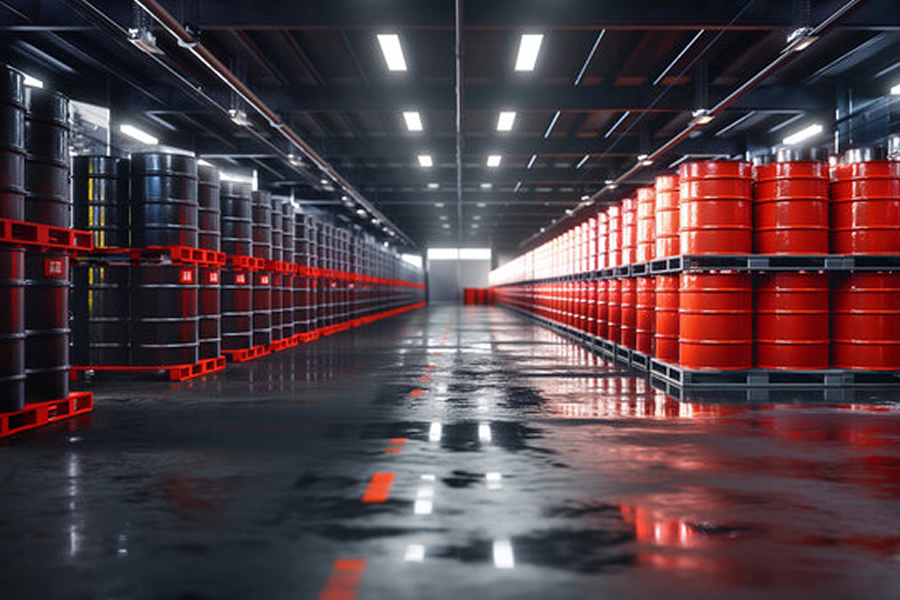
Supply base operations are the backbone of the oil & gas industry and in most of the time largely undervalued. Managing base operations is highly complex, manpower-intensive, with a large number of safety risks throughout the process. Managing the base includes warehousing, storage, pipe handling, tank farm management, materials handling and lifting operations, inventory management, stevedoring and many more.
Increased number of service locations and offshore operations make it even more complex. In addition, it requires specialized skills in dispatch planning, fleet utilization and vessel management. Coordinating supply (and return) for multiple offshore locations increases the challenge even more.
Because of the risks and costs involved in the oil and gas operations, maintaining a high stock of equipment and materials has always been evident in the industry. This, in turn, requires large warehouse space, equipment and people to manage the operations. The role of warehousing has always been to receive, store and dispatch equipment and materials.
Yet, achieving best practices and ensuring the most effective flow of materials, storage and inventory management is challenging. Efficient resource utilization, stock turn rates, error-free picking and space utilization, is where significant opportunities for improvement reside, especially in the oil & gas industry. There are a number of methodologies and approaches used in warehousing and inventory management, but the degree of caution shall be exercised – oil & gas industry is not driven by moving a high number of SKUs and alike; safety and reliability is the key. Hence, the balance between the traditional stock management and industry specifics is vital, with qualitative analysis of each step involved in warehouse operations. Improving information flow between the supply chain group and operational personnel is one of the key areas of focus that can produce significant benefits.
The number and type of equipment used in materials handling operations are fairly standard in most of the applications. Yet, due to the large exposure of people to safety hazards, a number of tailor-made and modified equipment is becoming a widely accepted practice. In addition, special bulk handling equipment is used in the industry to automate bulk materials storage and transportation.
Handling of dangerous goods is a separate discipline that may require specialized expertise and qualifications. Re-packing of general cargo, as well as classified (IATA, IMO, ADR) cargo, may be required on many occasions, i.e. in fully integrated operations with no vendor-managed-inventory practices in place.
Effective management of transportation resources could be very critical to drilling operations, in particular when multiple locations are served. Effective planning and scheduling, as well maintenance of the vehicles play a very important role in ensuring an interrupted supply of materials to the locations. Optimizing the best routing and maintenance requirements is achieved using special fleet management software packages, whereby vehicles dispatch is as efficient as possible, as well as providing more effective visibility on vehicle maintenance and breakdown.
Offshore Supply Vessels (OSV), also called Platform Supply Vessels (PSV) are used for transportation of materials between the supply base and offshore locations. Storage capabilities of offshore installations are the most important single constraint that makes effective vessel utilization challenging, with routing being the most complicated process. Many of today’s vessel routing is done using manual tools without the utilization of any software packages. With the space being the biggest constraint ineffective vessel utilization, in many occasions, equipment and materials from offshore installations must be unloaded, before the new supply can be transferred to the installation, which results in requirements for a larger deck space on the vessels, hence more costly logistics operations.
Weather is another challenging aspect, as unworkable sea conditions affect vessels’ route planning and availability. Sudden demand spikes for equipment and materials from offshore installations add another critical dimension vessel operations management. Effective vessel utilization involves a large amount of coordination between all user groups with a requirement of strong integrated demand planning, achievable via various planning and / or ERP software packages.
In addition, those packages allow real-time visibility (tracking) of vessels’ locations that provide a better understanding of fleet utilization and fuel consumption. With multiple vessels operating the field, dispatching the closest vessel may help during sudden demand spikes. Moreover, vessel tracking provides an insight into vessels pre-agreed most optimum route and sailing speed to achieve the most effective fuel consumption.
Tubular products used in the oil industry (also known as OCTG) require a vast amount of open (and closed) storage facilities designed to store multiple joints of pipes, with easy access for loading and offloading, as well as inspection and rig dispatch preparation.
There are a number of industry-used standards on storage and handling of OCTG, yet manufacturers recommendations are considered to be the most robust. Those instructions govern the handling, storage, and inspection requirements, to ensure OCTG can be used and the cost of inspections and repairs are reduced to a minimum. This is in particular critical in Chrome and Premium connection OCTG.
Today, the priority task of Amsterdam Bulk Handling B.V. is to further reduce the specific accident rate. The basis for the development of anti-corrosion measures included in the overall strategy is monitoring (corrosion activity of pumped media, corrosion rates) and the results of industrial safety expertise of the studied pipeline fleet. Based on these data, an assessment of options for the further operation of pipeline systems is made. Specialists of the company will continue to work in the future aimed at improving the reliability of the fleet of pipelines of Amsterdam Bulk Handling B.V. and reducing operating costs.
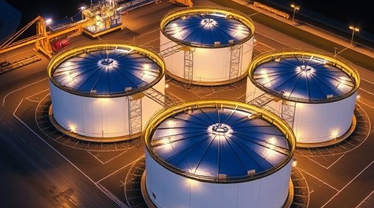
Amsterdam Bulk Handling B.V. has specialized in the handling and storage of crude oil and petroleum products for decades. The company also offers downstream processing steps, such as the blending of petroleum products, as well as customized logistics management solutions.
Amsterdam Bulk Handling B.V. is also regarded as a competent provider for the storage of gases. Besides other locations in America, as well as Asia and Europe, the growing network includes the Amsterdam Bulk Handling B.V. Gas Terminal, one of Europe’s largest independent LPG and petrochemical gas terminals, with two 135,000 cbm, fully refrigerated gas tanks under construction.
As a partner to the petrochemicals industry, Amsterdam Bulk Handling B.V. specializes in the storage of everything from basic chemicals to specialty chemicals. Here too, all operations are performed in a safe and customer-focused way and meet the highest safety and environmental standards.
Is your device constantly running out of charge or shutting down unexpectedly? Our expert battery replacement service restores your laptop or phone's battery life, ensuring longer usage, better performance, and hassle-free operation. We use high-quality, compatible batteries for safe and reliable results.


From crude, gasoline, and naphtha to jet A1, fuel oil, and diesel, we provide total solutions. And we never stop advancing. presenting fresh goods and services. constantly considering the future. by offering storage for both energy and necessary chemicals, diversifying. Our goal is to develop storage and blending technologies that enable alternative energy sources. We already have LPG and biofuels in storage, and we hope to add LNG soon.
Years of experience
Products Stored
Customer satisfacton
Expert technicians
We offer a wide range of dermatology treatments, including acne care, psoriasis management, skin cancer screening, cosmetic procedures like Botox etc.
We offer a wide range of dermatology treatments, including acne care, psoriasis management, skin cancer screening, cosmetic procedures like Botox etc.
We offer a wide range of dermatology treatments, including acne care, psoriasis management, skin cancer screening, cosmetic procedures like Botox etc.
We offer a wide range of dermatology treatments, including acne care, psoriasis management, skin cancer screening, cosmetic procedures like Botox etc.
We offer a wide range of dermatology treatments, including acne care, psoriasis management, skin cancer screening, cosmetic procedures like Botox etc.